
Home > Inspiration > Activities > Diving
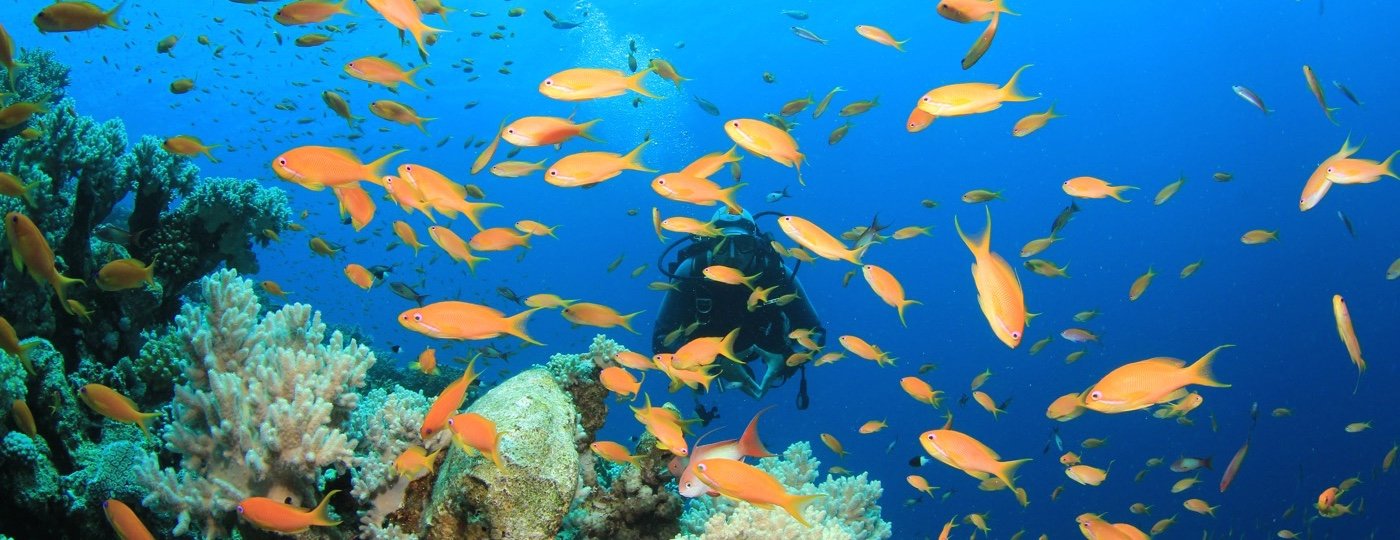
Mention diving and most people automatically think of the Maldives or the Great Barrier Reef. Exotic locations where warm, transparent waters teem with tropical fish. But diving is everywhere from the Highlands of Scotland (those deep, deep lochs are not for the faint hearted) to blue holes off Belize, wreck sites on Malta and even thermal pools in Iceland.
The warm Mediterranean waters on Spain's Costa del Sol are perfect for beginners and you'll find a choice of PADI (Professional Association of Diving Instructors) centres in almost every resort. So if you're thinking about taking the plunge, this is good place to start.
But don't expect to paddle about in the shallows even on your first attempt. Or worse, see nothing at all. Visibility in the Mediterranean is usually very good and the sea life you come into contact with will be curious, but not worrying.
Just off Marbella the drowned hulk of an 18th century French battleship makes an amazing wreck dive with a maximum depth of only 6m. La Herradura, 20 minutes from the pretty town of Nerja, is another great Mediterranean shore dive for beginners. And for accessible and low-depth reef diving try Benalmádena a few minutes west of Torremolinos.
Tarifa, the national park about an hour west of Marbella, is challenging and fascinating for more experienced divers with 10 sites available, a range of depths and some amazing marine life.
No one is ever going to accuse Iceland of ordinary. With cities that look like fairy tale fishing towns and a strange, fantasy world landscape, it's one of the most breathtaking countries in the world. But dive here and what's above ground is nothing compared to the wonders that await below.
Iceland's waters are cold and crystal clear and perfect for exploring. And this is the land of the midnight sun. So it's perhaps not so strange to find that the most amazing diving experience on Iceland is at night between May and August.
Visit Silfra on the edge of the Thingvellir National Park, 45 minutes from Reykjavik, and you can dive in sub-zero temperatures through a thrilling underwater landscape to depths of 18m. You're completely unaware of day or night as the unearthly light filters around the vast, cathedral like structures around you in water pure enough to drink. This is not an independent dive, but there's an excellent choice of diving centres on Iceland offering guided Silfra day and night dives.
Wreck diving is a very particular passion and if you want to indulge in the warm, lovely waters of the Mediterranean, the stretch of coast between Saint Tropez and the pretty Porquerolles Islands is littered with sunken ships to explore.
But, unless you're experienced, independent wreck diving isn't just risky, it's not much fun.
To get more out of the experience and visit the most interesting wrecks, use one of the registered diving centres on the Côte d'Azur. Look for PADI certification and these are the people well qualified to know where and when to dive. Almost all PADI centres also offer short diving courses so even beginners can visit some of the more accessible wrecks on holiday.
If wrecks aren't your thing, there's wonderful diving that doesn't rely on disaster to be had on the Côte d'Azur too.
Port Issol, the Embiez Islands and Le Brusc about an hour east of Marseilles are very popular for marine life, clear waters and gentle sandy paths. And further along the coast towards Nice, Cap d'Antibes is one of the most rewarding places to dive on the Côte d'Azur.